
Scent Marketing in a Hotel: How Scent Affects the Guest Experience
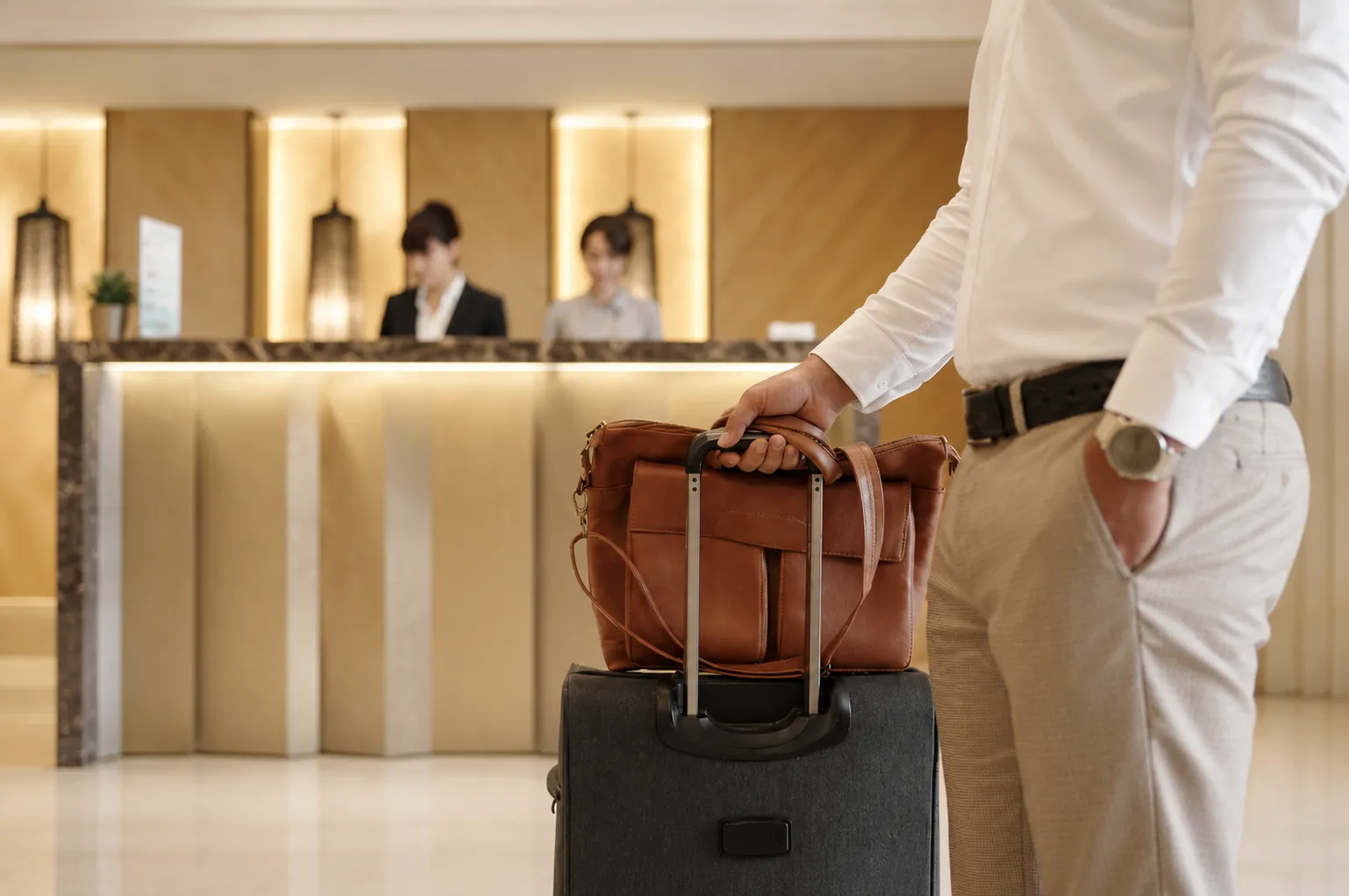
A guest crosses the threshold of a hotel, and within a few moments, they begin to form an opinion about the place. They haven't seen the room yet, haven't spoken at length with the staff, and haven't tried breakfast. Yet, they have already noticed the architecture, light, materials, sounds, temperature – and scent.
This last element often works less consciously than visual identification or interior design, but that does not mean it is any less important. Scent helps shape the atmosphere of a place, can reinforce specific associations and emotions, and over time can become one of the key elements by which a guest recognizes and remembers a hotel brand.
That is why scent marketing in a hotel should not be reduced to simply placing a diffuser in the lobby and choosing a composition that "smells nice". A well-designed scent is part of a larger experience system – much like interior architecture, music, communication style, or service standard.
Key Information
Scent marketing in a hotel is more than just a pleasant smell in the lobby. It is the conscious design of a sensory experience that should align with the brand's character and the needs of its guests.
Key principles:
-
scent should stem from the hotel's strategy and positioning,
-
not every space needs to be scented,
-
the lobby is a natural touchpoint for scent, but not the only one,
-
individual zones may require different scenarios,
-
intensity is just as important as the composition itself,
-
scent should be tested in the actual physical space,
-
diffusion technology should be matched to the facility's parameters,
-
a consistently used composition can, over time, become a brand signature,
-
a signature scent can also be used outside the hotel – in candles, diffusers, cosmetics, or gifts for guests.
The most important rule remains simple: first we design the experience, then we select the fragrance for it. Not the other way around.
What is scent marketing in a hotel?
Scent marketing is the conscious use of fragrance to build a specific experience for the audience within a space. In the context of a hotel, this means designing the atmosphere in a way that allows scent to support the character of the brand, the venue, and the emotions the hotel wants to evoke in its guests.
This is an important distinction.
You can make a lobby simply smell pleasant. However, you can go much further and ask the question: how should this specific hotel (the hotel brand) smell?
Is its character calm and intimate? Urban and energetic? Elegant and sophisticated? Close to nature? Avant-garde? Family-oriented? Or perhaps its brand is built on local heritage?
The answer to these questions serves as the starting point for creating or selecting a fragrance that naturally complements the interior. In its most developed form, it can result in a signature scent – a brand olfactory logo, which is a distinct composition designed specifically for a particular hotel or chain.
Why does scent matter for the guest experience?
The hotel experience is inherently multisensory. After all, a guest does not evaluate a hotel solely based on its logo or photos on a website. They touch the bedding, hear the music in the lobby, see the light and colors of the interior, taste the dishes in the restaurant, and perceive the fragrance of the space. Each of these elements contributes to the overall impression.
Scent influences the perception of atmosphere
The exact same space can be perceived differently depending on the sensory stimuli accompanying it. Scent can support the impression of freshness, peace, warmth, elegance, energy, or closeness to nature.
However, this does not mean that a universal "scent of luxury" or "scent of relaxation" exists that will work in every property.
What is coherent with a boutique hotel in a historic townhouse might not fit a modern business hotel at all. We expect one experience from a seaside resort, another from an intimate SPA facility, and yet another from an urban lifestyle hotel.
Good to know
A good scent is credible in the context of the place where we experience it.
Scent is strongly linked to emotions and memory
The sense of smell is a special sense also because of how olfactory information is processed by the brain. The olfactory system remains closely linked to the structures involved in processing emotions and memory.
This is why a scent can trigger a very specific memory – sometimes even before we consciously recall what it actually reminds us of.
In the hotel industry, this opens up an interesting opportunity. A distinctive composition that a guest encounters during repeated stays can, over time, begin to function as a recognizable brand element.
Much like a signature color, architectural detail, greeting style, or sound.
Scent can genuinely impact the hotel guest experience
In an experiment conducted in a real, four-star hotel in Barcelona, 99 people stayed in two identical rooms – one with an added pleasant scent and the second without scenting.
Participants staying in the scented room showed on average a higher level of positive emotions and a more favorable emotional state than those in the control group.
Source: Anguera-Torrell et al., European Journal of Tourism Research, 2021.
Scent participates in building the first impression
The lobby is one of the most important touchpoints between the guest and the hotel. This is where the brand's digital promise meets reality for the first time.
Photos on the website might have looked great. The booking process might have been seamless. Now, however, the guest is physically in the space. At this moment, the brand stops being behind a screen and becomes an experience.
Scent is one of the elements that can ensure the first impression is consistent with what the hotel previously promised and how it wants to shape the customer experience.
The scent of a space always exists. It is worth managing it consciously
One common mistake is treating scent as an optional addition that can either be introduced to a hotel or omitted altogether. In practice, every space has its own scent, even if no one consciously designed it.
New carpeting, cleaning agents, wood, and other finishing materials, textiles, air conditioning, the kitchen, or natural odors resulting from the daily operation of the property – all of this creates an olfactory background that the guest perceives from the moment they enter the hotel. Therefore, a lack of intentional scenting does not mean a lack of scent. Rather, it means leaving this element of the experience to chance.
That is why scent should be treated much like lighting, music, or interior design: as one of the factors influencing how the space and the brand are perceived.
This does not always mean having to create a custom composition from scratch. In one scenario, the best solution might be a carefully selected existing fragrance, in another – a modification of one, and in yet another – creating a unique signature scent. What matters more than how the composition was created is whether it was consciously matched to the character of the hotel, its spaces, its guests, and the experience the brand wants to build.
This is precisely why deciding on a scent should not be reduced to choosing the "nicest" composition from a catalog. Professional scent selection begins with understanding the venue – its character, the function of individual zones, the existing olfactory background, technical conditions, and how the hotel wishes to be perceived and remembered by its guests.
When designing or selecting a scent for a hotel, it is worth considering, among other things:
-
hotel positioning,
-
brand personality,
-
interior character and design,
-
location,
-
guest profile,
-
reasons for and context of the stay,
-
brand values,
-
emotions the hotel wants to evoke,
-
individual points along the customer journey.
Only then does the moment come to translate these assumptions into perfumery language. Importantly, it does not have to be literal.
A seaside hotel does not need to smell like "sea breeze". A hotel located in a forest does not automatically have to use a composition dominated by pine needles. A five-star property does not require a fragrance described in a catalog as "luxury".
The most interesting solutions emerge when the scent interprets the brand instead of illustrating it in the most obvious way.
Where can scent be used in a hotel?
Hotel scent marketing should be treated as designing a map of olfactory touchpoints, rather than simply deciding where to place a device.
Not every space requires scenting. Nor should every space smell the exact same way.
Lobby and reception
This is the natural starting point for the project. The lobby is responsible for the first impression, and at the same time, it is a space that guests pass through multiple times during their stay.
Because of this, the scent can gradually become associated with a specific place and brand.
Corridors and common areas
In larger hotels, scent can provide sensory continuity between selected zones. However, appropriate intensity becomes especially important here.
A guest should not feel as though they are walking into another cloud of perfume every few meters.
SPA and wellness
In areas dedicated to regeneration, scent can serve a slightly different purpose than in the lobby. It should still belong to the world of the brand, but it can more strongly support the nature of that specific experience.
However, this does not mean that every SPA should smell like lavender. Sensory design requires more subtlety than assigning individual notes to specific emotions.
Rooms
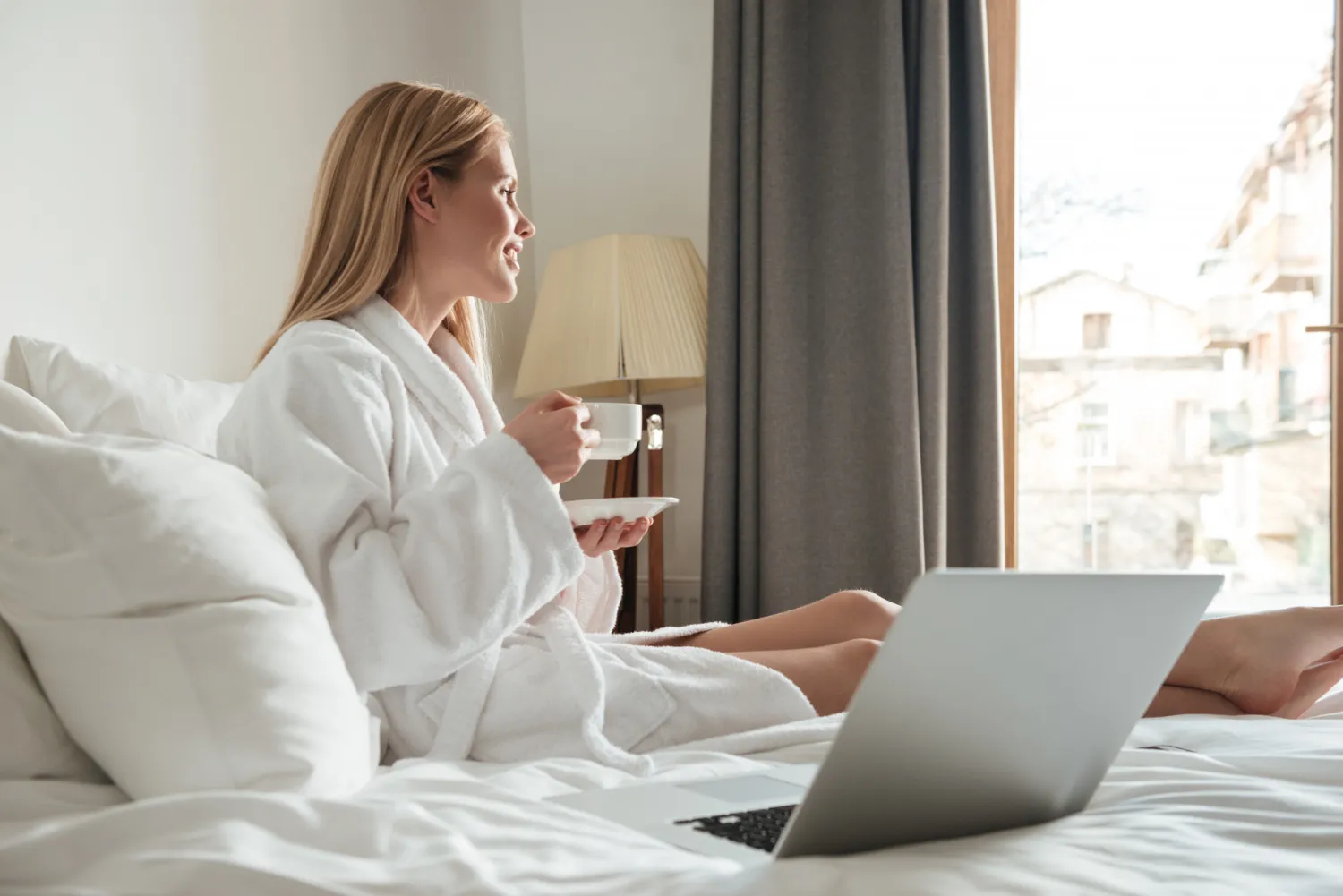
For a few hours or days, a hotel room becomes the guest's private space, so the way scent is used there should be more subtle than in the lobby or common areas. However, this does not mean it has to be given up entirely.
One solution can be introducing products that utilize the brand scent, such as a candle, reed diffuser, or room mist. This allows the scent experience present in common areas to continue inside the room, but in a more intimate form. Depending on the standard and character of the facility, such a product can serve as part of the room amenities, a welcome gift, or an item the guest can purchase and take home.
In rooms, fragrance compositions combined with technology to neutralize unwanted odors are also particularly interesting. After cleaning, perceptible aromas of cleaning products may remain in the room, and during use, other odors appear that are difficult to completely eliminate just by airing out the space.
Instead of covering up one intense smell with another, one can use, for example, a room mist that combines the brand scent with an unwanted odor neutralizer. As a result, preparing the room for the next guest becomes part of a consciously designed experience standard: the space does not smell randomly of cleaning chemicals, but welcomes the guest with a scent consistent with the hotel's character.
Restaurant and breakfast area
In a restaurant, scent requires an exceptionally well-thought-out approach, as natural food aromas are an integral part of the dining experience. The goal is not to introduce an intense composition that competes with what is on the plate, but rather conscious management of the entire olfactory background.
Depending on the nature of the restaurant, subtle compositions related to the culinary experience can be used – for example, notes of fresh basil, herbs, coffee, or other aromas aligned with the concept of the venue. Scent can then support the atmosphere of the place rather than function as an isolated element.
Equally important is the second aspect. A restaurant does not only smell of freshly ground coffee or baked goods. Kitchen odors, frying, fat, or intense dishes can also leak into the dining hall or adjacent parts of the hotel.
In such areas, compositions combined with unwanted odor neutralizers can be a solution. For instance, a subtle scent of basil, herbs, or coffee can simultaneously help build the restaurant's atmosphere and assist in neutralizing less desirable smells.
This is an important distinction: professional scent marketing should not rely on covering up one smell with another. The goal is to manage the space's olfactory background – reducing what the guest should not feel and consciously introducing what supports the character of the place and the entire stay experience.
One scent throughout the entire hotel or several?
There is no single correct answer. In smaller properties, a single characteristic scent present at key touchpoints may be sufficient. In larger hotels and resorts, it is worth considering a complete olfactory architecture.
It can include:
-
the primary brand scent – e.g., in the lobby and reception area,
-
complementary compositions – e.g., in the SPA,
-
neutral zones – e.g., restaurants or selected private spaces.
Consistency is what matters most. Individual compositions do not have to be identical, but they should belong to the same sensory world.
How is a scent created for a hotel?
Professional implementation of scent marketing begins long before turning on a diffusion device.
1. Brand and space analysis
The first step is understanding the hotel – its strategy, guests, interior, location, nature of stay, and the experience it wants to create.
Technical matters are also important: cubic volume, ventilation, room layout, foot traffic flow, and zoning.
2. Fragrance strategy
At this stage, the role of scent across the entire experience is defined.
Where should it be present? What function should it serve? Should it become a brand code? Is a single scent needed, or an entire system? In which places is it better to forgo scenting?
3. Creation of compositions
Strategic assumptions are then translated into perfumery language.
In the case of a bespoke signature scent, composition proposals are created that can be evaluated, compared, and developed in subsequent iterations.
It is not merely about choosing the fragrance that decision-makers like best. Alignment with the previously defined strategy should also serve as a criterion.
4. Testing in real space
This is a step that should not be skipped.
A scent evaluated on a blotter strip or in a small room can behave completely differently in a multi-hundred-meter lobby.
Its perception is influenced by cubic volume, ventilation, temperature, interior materials used, natural space odors, and the number of occupants.
Therefore, testing on-site prior to final implementation is essential.
5. Selection of technology
Large spaces require solutions that enable controlled and even fragrance distribution. One technology used is cold diffusion, which allows the composition to spread through the air without heating it.
The device should primarily be matched to the parameters of the specific space, rather than chosen solely based on declared coverage.
6. Intensity calibration
More does not mean better.
One of the most important elements of professional scent marketing is finding the level at which the fragrance helps build the atmosphere without dominating it.
Most common mistakes in hotel scent marketing
The first is choosing a composition solely based on the personal taste of the owner or manager. However, a hotel does not design an experience for a single individual – it designs it for a specific target audience and within a specific brand context.
The second issue is excessive intensity. If a fragrance begins to dominate the space, it can produce the opposite effect of what was intended.
Another mistake is using the exact same composition regardless of the room's function. The lobby, SPA, restaurant, and hotel room each address completely different guest needs.
Problems also arise from mismatched technology for the space, a lack of testing, ignoring ventilation systems, or frequently changing fragrance compositions.
If a scent is meant to become a brand code, it requires consistency.
It is also worth remembering that scent marketing is not meant to mask space odor problems. First, the source of any unwanted odor must be eliminated, and only then should an additional layer of experience be designed.
Hotel scent outside the hotel as well
At this point, scent marketing begins to transition into the broader concept of scent branding.
If a distinctive hotel fragrance is created, it does not have to remain solely in the lobby.
It can also be used across other brand touchpoints – for example, in the form of:
-
candles,
-
reed diffusers,
-
interior mists,
-
hotel cosmetics,
-
scented materials,
-
welcome sets,
-
VIP gifts,
-
products available in the hotel boutique.
This opens up a completely new dimension of experience while allowing scent to be transformed into a product and an additional source of revenue.
A guest returns from a trip, lights a candle at home with the hotel's fragrance, and reconnects with the brand – this time hundreds of kilometers away from the property.
Scent as a brand asset
In a world oversaturated with marketing messages, brands need something more than just another image, slogan, or advertisement.
Scent engages a sense that is still used far less frequently in communication. It allows for building a brand experience beyond the screen – in physical space, during a guest's genuine contact with the hotel.
Consistently applied, it can become another brand code: reinforcing its character, creating associations, supporting experience recall, and building an emotional connection with the venue.
That is precisely when scent stops being an addition to the space. It becomes a brand asset that can work toward recognition and guest loyalty.
Is scent marketing a solution only for luxury hotels?
Definitely not. The scale of implementation should correspond to the scale of the facility, its needs, and business goals.
An intimate boutique hotel can start with a single, carefully designed touchpoint – for example, the lobby. A large resort can create an extensive olfactory architecture covering the reception, wellness area, common areas, and products for guests.
A hotel chain, on the other hand, can use a single signature scent as an element that builds experience consistency across different locations.
How to measure the effects of scent marketing in a hotel?
Scent is part of a complex experience, so its impact should not be reduced to a simple equation like "we turned on the diffuser, therefore sales increased."
However, its effectiveness can be evaluated.
Depending on the project's goal, it is worth analyzing:
-
evaluation of the hotel's atmosphere,
-
guest satisfaction levels,
-
spontaneous comments regarding the fragrance,
-
reviews referencing the atmosphere and experience of the space,
-
brand scent recognition,
-
associations evoked by the composition,
-
sales of products utilizing the signature scent,
-
results of studies conducted before and after implementation.
For more advanced projects, it is worth defining what successful implementation actually means right at the strategy stage.
Scent marketing does not function in a vacuum. It is one element of the experience alongside service, design, food offerings, room comfort, communication, and the overall quality of the stay.
You might also be interested in: Scent as an element of brand equity: how to measure its real impact on the brand
Take care of scent as part of your hotel's experience
Solamé designs fragrance solutions for hotels and other commercial spaces. We start by getting to know your brand, property, and the experience you want to create for your guests. We analyze olfactory touchpoints, select the appropriate composition, or – if the project requires it – create a unique brand scent. We select the technology and application method, conduct in-space testing, and support the entire implementation process.
You don't need to know how your hotel should smell. That's what we're here for.
Let's talk about your space and see how scent can become a part of the experience guests remember and want to return to.
FAQ – scent marketing in a hotel
Does scent in a hotel really affect the guest experience?
Scent is one of the stimuli that help shape how a space is perceived, and it can influence the atmosphere, emotions, and associations linked to a place. However, it does not work in isolation from other elements of the experience. It delivers the best results when it is consistent with the interior design, brand identity, service, and overall guest experience.
What scent works best in a hotel lobby?
There is no single scent suitable for all hotels. The composition should stem from the brand's character, location, interior design, guest profile, and the emotions the hotel wishes to evoke.
Can a hotel have its own signature scent?
Yes. A bespoke fragrance composition – a signature scent – can be created for a hotel based on its strategy and identity. Such a scent can then be used both within the space and in products or materials designed for guests.
How are large hotel spaces scented?
In larger spaces, professional diffusion systems matched to the volume, room layout, and ventilation are used. Cold diffusion is one of the available options. Before full implementation, it is worth testing the solution directly on-site and calibrating the intensity accordingly.
How much does scent marketing cost in a hotel?
The cost depends on the scope of the project. Factors influencing the price include the size and number of scented spaces, the method of creating or selecting the fragrance, the number of devices, diffusion technology, fragrance consumption, and the level of service required. Implementation in a small boutique hotel looks different from creating a scent system for a resort or an entire network of properties.
About the Author

Weronika Barnat
Brand & Scent Branding Strategist
For over 10 years, I have been helping brands build a competitive edge through strategy, communication, and customer experience. At Solame, I combine branding with the power of scent, designing solutions that engage emotions, enhance recognition, and make brands stay in memory longer.
Cold Air Diffusers vs. Reed Diffusers: Which Should You Choose?

How to leverage scent in event marketing?

Scent as an element of brand equity: How to measure its real impact on the brand

Why Do We Remember Scent and Not Ads? The Psychology of Scent Branding in Solame’s Practice
The future of branding engages all the senses.
Let's create an experience as unique as your brand.
Get in Touch
668 307 119
798 234 260
hello@solame.pl
ul. Basztowa 23/5, 31-156 Kraków
Quick Links
Offer
Scented Merchandise
Who We Work With
About Us