Scent in e-commerce: How to leverage scent marketing for online sales
What makes some brands stay in customers' minds long after a purchase?
In e-commerce, brands compete for customer attention through imagery, content, and increasingly refined shopping experiences
Key takeaways
-
Scent marketing works in e-commerce too – primarily at the physical touchpoints between the customer and the brand
-
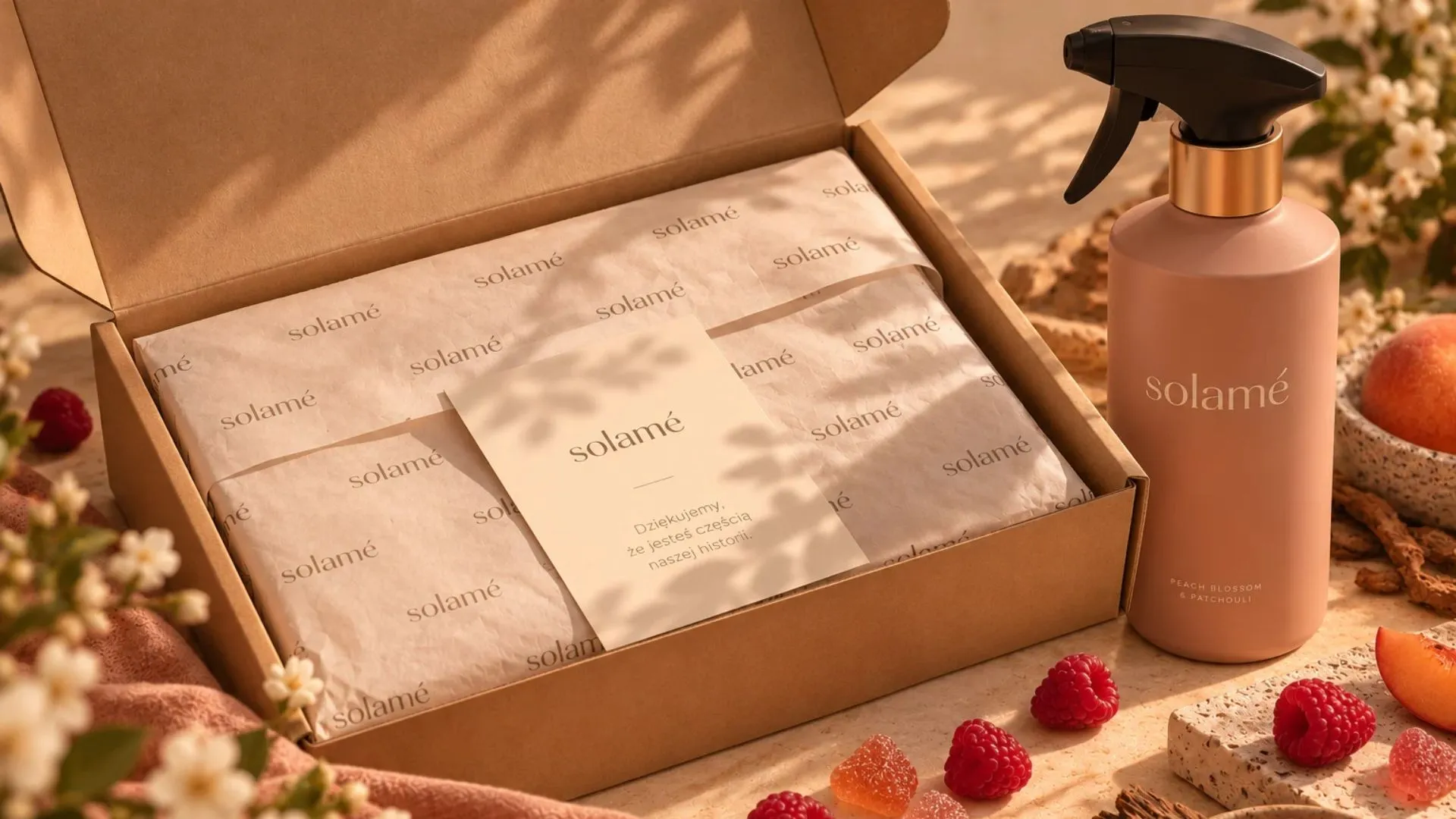
Unboxing is a key moment – scent can complement the unboxing experience and enhance its character
-
Possibilities extend beyond scented packaging – they include scent cards, tags, samples, candles, diffusers, mists, and gift sets
-
A scent logo can be part of brand identity, just like its colors, typography, or signature sound
-
Scent supports omnichannel strategy – the same fragrance composition can connect online and offline experiences
-
Effectiveness is worth measuring – through customer research, feedback analysis, and comparative testing
Can scent marketing work in e-commerce?
Scent marketing is most commonly associated with scenting commercial spaces: boutiques, hotels, beauty salons, or showrooms
In e-commerce, the situation looks different
After all, an order placed in an online store eventually takes a physical form
It is precisely in these moments that space for scent marketing opens up
An online brand leverages the packaging that arrives directly at the customer's home
Scent marketing in e-commerce is therefore the intentional design of physical touchpoints with the brand that complement the digital customer journey
Good to know
In sensory marketing, we talk about sensory touchpoints
Scent and the perceived quality of products in e-commerce
The way a package opens and the emotions that unfold throughout the buying experience can shape how customers judge a product. In consumer psychology, quality heuristics are the mental shortcuts people use to decide whether something feels worth its price.
Packaging as an early sign of quality
A beautifully made box, carefully chosen paper and considered details such as embossing, foil and elegant typography all set expectations before the product is even revealed. They suggest that the brand has taken care over every detail, inviting customers to trust the quality of what lies inside.
Scent brings the experience to life
Packaging appeals to sight and touch, while scent introduces another powerful layer. Our sense of smell is closely linked with emotion and memory, so an aroma can influence how an experience feels before we have consciously formed an opinion. Its contribution to perceived quality is often subtle, yet memorable.
A thoughtfully selected fragrance can complement the rest of the brand experience. A soft woody note might suggest refinement, while a crisp, fresh scent can evoke cleanliness and precision. The key is harmony: the fragrance should feel at home alongside the materials, colours and personality of the brand. When every sensory detail works together, the result feels considered and complete in a way visual design alone cannot achieve.
Good to know
In an experiment described in the journal Marketing Letters ("Unpacking olfactory marketing: initial evidence for the positive effects of scented parcels on post-order consumer responses in e-commerce", Marketing Letters 36(4), December 2025), participants receiving scented parcels evaluated the unboxing experience, the product, and the brand more favorably than those receiving unscented parcels
However, it is worth keeping in mind that these are preliminary laboratory experiment results, not proof of actual sales growth for every online store.
The unboxing moment: a ritual that builds value
This is particularly important for premium brands. For them, the way a product is presented or delivered forms an integral part of its emotional value. The customer is paying not only for the item itself, but also for the experience of receiving it.
The moment of opening a package, the so-called unboxing, is one of the few touchpoints where a brand has the customer's full attention. In this brief moment, scent can play a role that no other element can: it creates an intense first impression and stays in memory as part of the brand association. A well-designed unboxing ritual also increases the willingness to share the experience on social media and recommend the brand.
What role does scent play in unboxing?
A carefully selected fragrance composition can:
-
Enhance the first impression – introducing an additional sensory element the moment the box is opened.
-
Highlight brand positioning – communicating elegance, freshness, naturalness, or cosiness.
-
Build a cohesive experience – connecting the scent with the color scheme, materials, and aesthetics of the packaging.
-
Support storytelling – referencing the brand's story, collection, or campaign.
-
Create an additional touchpoint – especially if the scent carrier remains with the customer after unboxing the package.
How to introduce scent to e-commerce shipments?
There are many ways to use scent in shipping packaging. The choice of the right solution depends on the nature of the product, order volume, budget, desired effect, and technical capabilities.
1. Scented cards – a subtle communication element
One solution is scented cards placed inside the shipment.
They can serve as:
-
welcome cards and thank-you notes for purchases,
-
materials sharing the brand story,
-
inserts promoting a new collection,
-
cards showcasing a signature scent,
-
additions to PR and gift sets.
Thanks to a suitable fragrance carrier, they combine visual communication with an olfactory experience.
The card can feature a logo, a short tagline, a description of scent notes, or a QR code leading to a landing page about the fragrance concept.
Instead of an anonymous fragrance composition, the customer receives an element of consciously designed brand identity.
2. Scented paper and tissue paper
Paper is one of the primary materials used in e-commerce packaging. It can also serve as a scent carrier.
Depending on the production technology and type of material, it is possible to prepare paper packaging elements containing a fragrance composition.
However, this solution requires proper testing. You should check:
-
the longevity and intensity of the scent,
-
stability during transport,
-
material behavior at different temperatures,
-
the potential transfer of fragrance substances onto the product.
Particular caution is required for shipments containing food, children's products, or materials prone to absorbing odors.
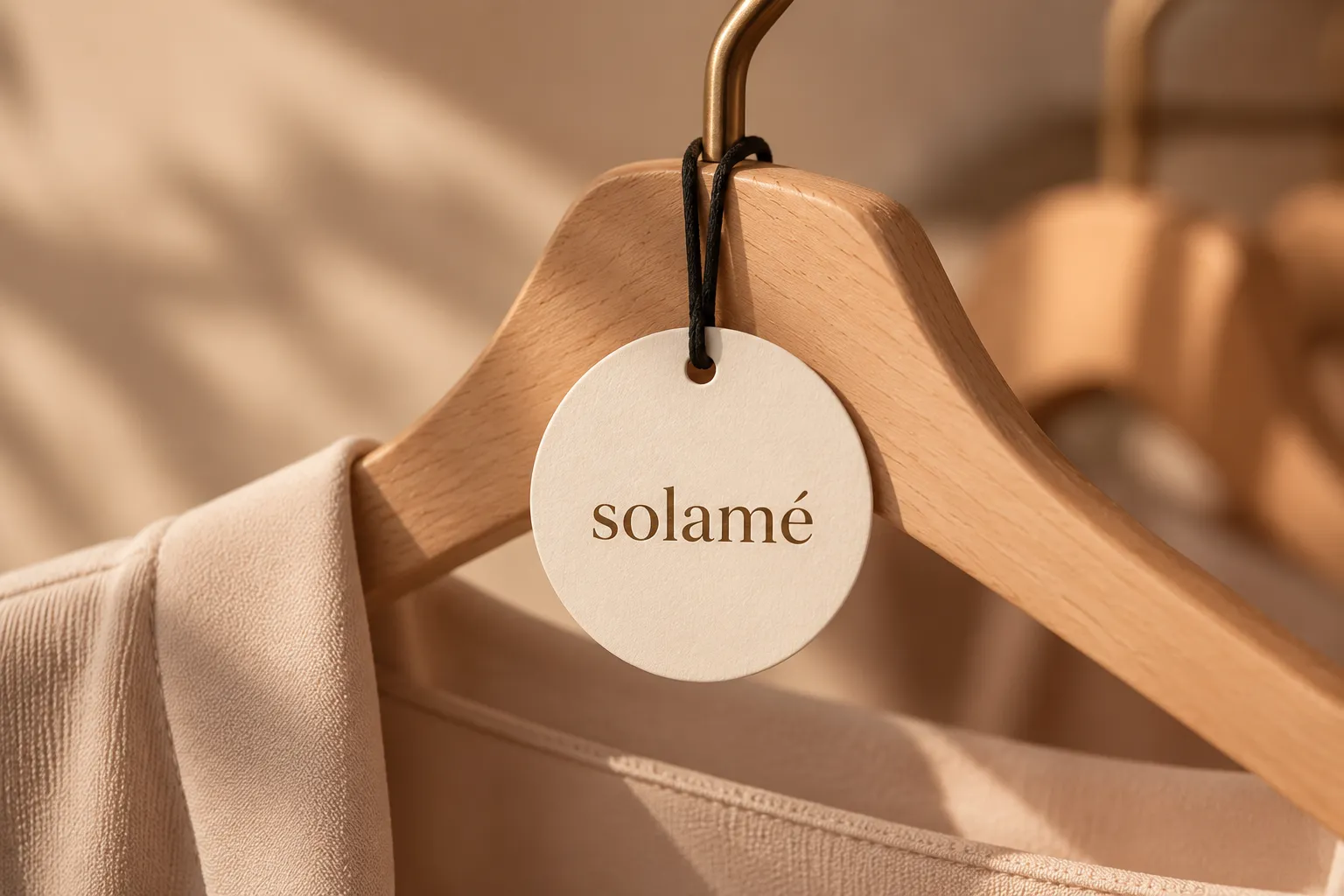
3. Scented tags with logo
A scented tag can simultaneously serve as a packaging element and a standalone gift.
Unlike a single-use info card, it can stay with the customer long after unboxing, e.g., as a fragrance accessory for the wardrobe, a car air freshener, or for another suitable space.
The ability to customize the shape, graphics, branding method, and fragrance composition makes tags a natural extension of a brand's visual identity.
4. Scent samples: from sachets to miniatures
Samples are one of the most flexible forms of scent marketing, as they can be adapted to almost any budget and shipment type. For brands developing their own signature composition, they are also the simplest way to introduce customers to a fragrance before they buy the full-sized version.
In practice, three formats are most commonly used:
- scented sachets: flat, lightweight, and easy to add to a parcel. Ideal for high volumes and as an addition to a wardrobe or drawer,
- vial and atomizer samples: convenient to use and associated with the premium segment; they allow customers to test the scent on skin or in a room,
- miniature product versions: e.g., mini candles, mini mists, or diffusers that demonstrate the quality of the full-sized lineup.
It is worth planning what the customer should do after experiencing the sample. A QR code or discount code for the full version turns a sample from a novelty item into an active step in the purchase journey.
5. Scratch-and-sniff and microcapsules
Fragrance can be encapsulated in microcapsules applied to paper, cards, or labels. The scent is released only after rubbing or scratching, which boosts interaction and creates a feeling of "discovery." This is a great option for cards, stickers, and inserts. It is important to verify the type of microcapsules used beforehand, as EU regulations on synthetic microparticles are tightening and may affect certain technologies.
6. Scented stickers and labels
A scented sticker can seal packaging, adorn a card, or act as a small gift. It is lightweight, affordable, and easy to design in line with brand identity. However, the effect is subtler than with cards or sachets, so it is best used as a supplement rather than the primary scent carrier.
7. Mists, candles, and diffusers as order add-ons
A more advanced form of scent marketing involves full-fledged fragrance products created under the online store's brand.
These can include:
-
scented candles with custom branding,
-
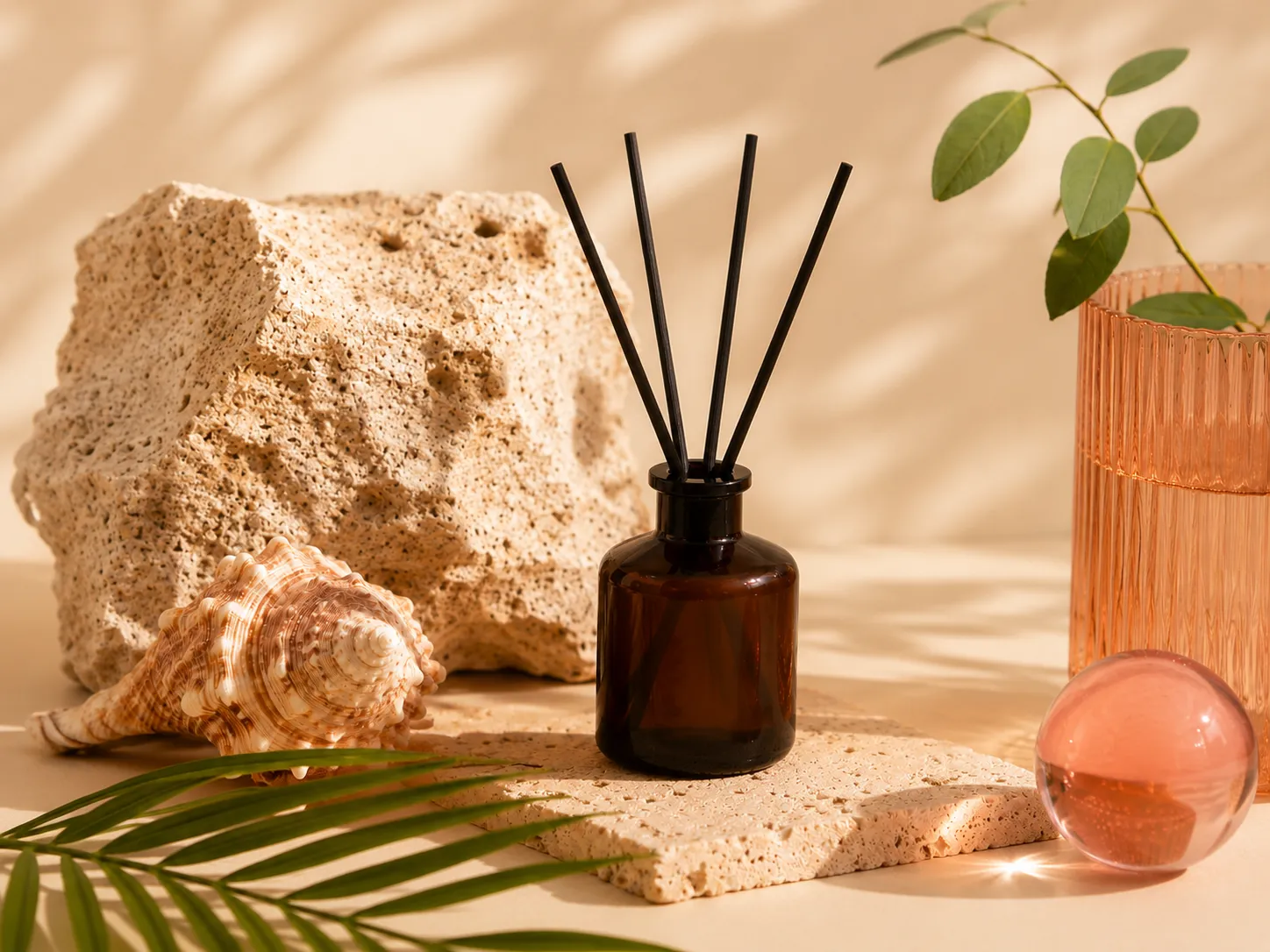
reed diffusers,
-
room mists,
-
car air fresheners,
-
gift sets and limited collections.
Such products can be added to orders, offered to VIP customers, used in campaigns, or sold as an independent product category.
In this way, scent ceases to be merely a packaging element and becomes a brand ambassador in its own right.
Important: not every product should be perfumed
Using a separate scent carrier is often a safer and more controlled solution than applying the fragrance composition directly to the sold product
Signature scent – when does a fragrance become part of a brand identity?
Signature scent, also known as a scent logo, is a composition selected or developed to build a brand's distinctive olfactory identity
Just like visual identity, it should stem from the brand's personality, values, positioning, and style of communication
Three levels of olfactory identity
Campaign scent
A composition selected for a specific launch, season, or event
Permanent brand scent
A chosen composition consistently used in shipments, showrooms, gift sets, or PR materials
Custom-developed scent logo
A proprietary composition created based on the brand’s strategy
This solution is particularly interesting for brands looking to build long-term sensory identity and leverage scent across multiple channels
However, it is worth remembering that a custom-developed scent does not automatically grant exclusive rights to its use
Scent marketing across the entire customer journey
The potential of scent marketing is not limited to the one-off moment of opening a parcel. It can form part of a broader customer experience strategy, covering subsequent stages of the consumer's relationship with the brand.
First purchase: a distinct first impression
The first order is the best moment for the scent to be noticed and remembered. It is therefore worth including a more prominent carrier that the customer can get to know and keep:
- a sample or miniature, e.g., a vial, mini mist, or sachet,
- a scented tag with a logo, which after unboxing goes into a wardrobe or closet,
- a full-fledged fragrance product, e.g., a candle, diffuser, or mist in a limited, branded edition, as a welcome gift.
Thanks to this, the customer gets to know the brand's fragrance composition before associating it merely with the packaging itself. The product stays with them longer, so the scent continues to work even after the unboxing is over.
Repeat purchases: a consistent, subtle signal
With subsequent orders, the scent no longer needs to be a separate gift. It is enough for it to appear in regular packaging elements, e.g.:
- in tissue paper or protective paper,
- on a thank-you note or insert,
- on a scented sticker, ribbon, or other finishing detail.
Loyalty and special occasions: scent as a reward
Further along in the relationship, scent can serve as a token of appreciation and recognition:
- a limited-edition candle or mist for regular and VIP customers,
- a new composition sample, teasing an upcoming collection,
- gift sets for holidays or the anniversary of the first purchase.
In this way, scent becomes not only a permanent packaging element, but also a tool for deepening customer relationships.
Reactivation campaigns
Fragrance elements can also be part of campaigns targeted at inactive customers.
A thoughtfully designed mailer containing a sample of a new collection and a small fragrance product can serve as an effective alternative to standard promotional communication.
However, such initiatives are best targeted at carefully selected customer segments and evaluated based on their ROI.
An idea for e-commerce
Instead of adding an identical gift to every order, you can create scented tiers for a loyalty program
| Stage | Role of scent | Example carrier |
|---|---|---|
| First purchase | Memorable first impression | Sample, tag, candle, diffuser |
| Repeat purchases | Recognition and consistency | Tissue paper, card, sticker |
| Loyalty | Appreciation and recognition | Limited edition, gift set |
Scent in product launches and marketing campaigns
Modern campaigns are increasingly built around a specific aesthetic and emotional world.
A brand does not merely present a product. It creates a story, a mood, and a set of associations with which it wants to be identified.
Scent marketing allows this narrative to be expanded into another dimension.
Imagine a fashion brand launching a collection inspired by a Mediterranean summer. The photoshoot features bright interiors, natural fabrics, warm light, and coastal landscapes. Communication centers on ease, lightness, and the atmosphere of a holiday getaway. Completing the campaign could be a fragrance composition based on notes of bergamot, fig, green leaves, and delicate musk. The scent appears in promotional mailings, influencer kits, during the collection launch, and in limited-edition fragrance products.
As a result, the individual elements of the campaign form a more cohesive story about the brand.
PR boxes and influencer marketing – how to tell a scent story online?
In influencer campaigns and PR activities, scent works best as part of a physical mailer kit. The creator, journalist, or blogger receives a package designed as a complete unit, where the fragrance composition stems from the creative concept rather than acting as a random addition.
The audience viewing the content will not smell the aroma directly, but they can "read" it in several ways: through the creator's words, characteristic notes, associations, the campaign story, and the overall aesthetics of the kit. Scent thus becomes part of the narrative, translating sensory experience into story, imagery, and emotion.
What can a sensory PR box look like?
An example kit may include:
- the main product, which is the reason for the campaign,
- personalized packaging, aligned with the brand identity and campaign theme,
- a card with the campaign story, providing context,
- a scent carrier, e.g., a candle, mist, diffuser, or tag,
- a description of the composition and its inspiration, featuring scent notes and associations that the creator can use in their own messaging,
- a QR code leading to a dedicated landing page or video that expands on the concept and gives the audience access to the full story behind the fragrance.
Why the description matters
Scent is difficult to describe, which is why it is worth providing creators with the right tools. A card detailing notes, inspirations, and a short story about the composition makes it easier for them to find the right words and explain to their audience what the scent "says" about the brand. Without this context, the kit might be perceived as a nice add-on rather than an essential element of the concept.
Realistic expectations
Scent can encourage creators to describe the sensory experience, and a well-designed kit gives them extra storytelling material. However, this does not guarantee more publications or higher reach. The final outcome is also determined by the choice of creators, the quality of collaboration, and the overall consistency of the campaign.
Scent marketing across different e-commerce industries
The possibilities for using scent vary depending on the product category and brand character
| Industry | Scent application possibilities |
| Fashion & accessories | Parcel scenting, seasonal collections, PR boxes, consistency with boutiques |
| Beauty & cosmetics | Scent samples, gift sets, signature scent |
| Home decor & interiors | Branded candles, diffusers, mists, lifestyle collections |
| Jewelry & luxury | Premium unboxing, elegant carriers, gifting |
| Lifestyle brands | Scent as part of the brand world and daily rituals |
| B2B e-commerce | Welcome boxes, corporate gifts, holiday sets |
In each of these industries, scent can serve a slightly different function. Therefore, it is worth tailoring solutions to the actual needs of the brand, rather than treating scent marketing as a universal add-on to every order.
From e-commerce to omnichannel – one scent, multiple touchpoints
Many modern brands operate across multiple channels simultaneously. They run online stores, own showrooms, organize events, participate in trade fairs, and expand physical retail.
In such cases, scent marketing can act as a bridge between individual experiences. A customer who receives a package with a brand's signature scent may later encounter the same composition during a visit to a showroom. Conversely, someone who discovered the brand in a boutique can recognize a familiar scent when unboxing an online order. The repetition of the composition can reinforce the consistency of experiences regardless of the contact channel.
However, it is worth remembering that the same composition may require different production technologies depending on its application.
A fragrance used in professional ambient scenting devices has a different formulation than a fragrance composition used for producing candles, diffusers, or scented materials.
Therefore, building a cohesive olfactory identity requires collaboration with a professional scent branding agency, such as Solame.
Contact us and schedule a free consultation. We will help you implement scent into your e-commerce step by step!
How to measure the results of scent marketing in e-commerce?
Scent marketing is often evaluated through the lens of emotions and impressions. However, this does not mean that its effectiveness must remain completely unmeasurable.
Depending on the implementation objective, various metrics can be analyzed.
- Customer reviews – evaluation of the unboxing experience, scent noticeability, and its fit with the brand.
- Social media mentions – spontaneous comments regarding the scent in posts, videos, and reviews.
- Brand recognition – research checking whether the target audience associates a specific composition with a particular brand.
- Repeat purchases – analysis of customer behavior receiving parcels with a scented element.
- A/B testing – comparison between groups receiving parcels with and without scent.
However, caution should be exercised when interpreting results. Purchasing decisions are influenced by many factors, so correlation alone does not confirm the effectiveness of the scent.
How to test effectiveness?
The most reliable solution may be an A/B test, where a randomly selected portion of customers receives a parcel with a scent carrier, while the rest receives one without it. Keeping all other packaging elements constant allows for a direct comparison of unboxing ratings, brand perceptions, and selected purchasing behaviors.
From a scented parcel to your own collection of fragrance products
Scent marketing in e-commerce can be the starting point of a much broader strategy.
A brand that initially uses a fragrance composition solely in its shipments may over time decide to create its own collection of fragrance products. Candles, diffusers, mists, cosmetics, or car fresheners can become a natural extension of its brand universe.
This is a particularly interesting direction for fashion, beauty, home decor, and lifestyle brands that want to expand their offering without deviating from their existing identity.
Branded fragrance products can serve multiple functions simultaneously:
- provide an additional revenue stream,
- strengthen brand recognition,
- complement loyalty programs,
- create new customer touchpoints,
- expand the gift and seasonal offering.
Importantly, they do not have to be limited to off-the-shelf products with a logo applied. Customization options also include the fragrance composition, vessel shape, glass color, capacity, materials, branding techniques, and packaging design.
This allows for the creation of a product that is fully aligned with the brand's visual identity and positioning.
The future of e-commerce is multisensory
For many years, the development of online stores focused on perfecting digital experiences. Today, what happens off-screen is becoming increasingly important.
Brands are looking for ways to build more engaging relationships, strengthen brand recognition, and create experiences that go beyond the transaction itself.
Scent marketing fits into this trend because it allows visual communication to be complemented by an emotional and sensory dimension.
It does not replace product quality, customer service, or a smoothly operating online store. However, it can serve as a valuable addition to these elements, especially when it is part of a well-thought-out brand strategy.
Scent marketing for e-commerce with Solamé
At Solamé, we help brands use scent as a conscious element of communication and customer experience building. We combine a strategic approach to scent branding with the capability to produce personalized carriers and fragrance products.
We support companies at various stages – from selecting the right fragrance composition from our library of scents, to developing a custom scent logo, to designing and producing scented cards, tags, candles, diffusers, mists, and gift sets.
We also help build consistent scent experiences across various brand touchpoints: e-commerce shipments, showrooms, boutiques, commercial spaces, and events.
Do you want your brand to be not only recognizable, but also remembered through scent?
FAQ – Scent in e-commerce
Can an online store have its own scent?
Yes. An e-commerce brand can choose a signature fragrance composition or order the development of a custom scent logo. Such a scent can be used in shipments, fragrance products, showrooms, and during events.
How long does the scent last in a parcel?
Longevity depends on the type of composition, concentration, carrier used, method of protection, and storage and transport conditions. There is no single universal duration for all solutions. Therefore, it is worth conducting tests prior to production.
Does scent marketing work only in premium e-commerce?
No. Scent marketing can also be used by brands in other price segments. The key is to match the solution to the brand's character, scale of operations, and desired effect. Not every brand needs a custom-crafted fragrance composition or an elaborate gift set.
Can scent in a parcel increase e-commerce sales?
Scent can enrich customer experience and support building brand associations. However, there is no basis to assume that its application alone will automatically increase sales. The potential impact on purchasing behavior is worth verifying through customer research, pilots, and appropriately designed tests.
How much does it cost to implement scent marketing in e-commerce?
The cost depends on the selected carrier, type of composition, level of customization, order volume, and scope of design work. Producing scented cards with a ready-made fragrance requires a different budget than developing a custom scent logo and an entire product collection. Implementation can be planned in stages, starting with a pilot.
About the Author

Weronika Barnat
Co-founder & Scent Branding Strategist
For over 10 years, I have been helping brands build a competitive edge through strategy, communication, and customer experience. At Solame, I combine branding with the power of scent, designing solutions that engage emotions, enhance recognition, and make brands stay in memory longer.
Cold Air Diffusers vs. Reed Diffusers: Which Should You Choose?

How to leverage scent in event marketing?

Scent as an element of brand equity: How to measure its real impact on the brand
Why Do We Remember Scent and Not Ads? The Psychology of Scent Branding in Solame’s Practice
The future of branding engages all the senses.
Let's create an experience as unique as your brand.
Get in Touch
668 307 119
798 234 260
hello@solame.pl
ul. Basztowa 23/5, 31-156 Kraków
Quick Links
Offer
Scented Merchandise
Who We Work With
About Us